The myth that panic, looting, and antisocial behavior increases during the apocalypse (or apocalyptic-like scenarios) is in fact a myth—and has been solidly disproved by multiple scientific studies. The National Earthquake Hazards Reduction Program, a research group within the United States Federal Emergency Management Administration (FEMA), has produced research that shows over and over again that “disaster victims are assisted first by others in the immediate vicinity and surrounding area and only later by official public safety personnel […] The spontaneous provision of assistance is facilitated by the fact that when crises occur, they take place in the context of ongoing community life and daily routines—that is, they affect not isolated individuals but rather people who are embedded in networks of social relationships.” (Facing Hazards and Disasters: Understanding Human Dimensions, National Academy of Sciences, 2006). Humans do not, under the pressure of an emergency, socially collapse. Rather, they seem to display higher levels of social cohesion, despite what media or government agents might expect…or portray on TV. Humans, after the apocalypse, band together in collectives to help one another—and they do this spontaneously. Disaster response workers call it ‘spontaneous prosocial helping behavior’, and it saves lives.
I’ve been sharing this article a lot recently! I think it’s important
Studies are basically just practice! Whatever you need practice for, you study! Just like any subject (math, science, language, etc.), you need to study in art to get better at it too!
There are so many different kinds of studies you can do, not limited to figure studies! You can study from master works, from observation, and/or from photos. You can also study for a variety of reasons: you can study form, value, color, anatomy, and/or gesture.
Figure Studies
This is what people refer to the most, because of course the (human) figure is very complicated and usually the centerpiece!
-Here is a link to a masterpost of websites used for figure posing, from video models to databases of photographs. MANY of these models are NUDE, so be aware and open-minded: https://www.artmodeltips.com/poses/poses/
1) Try to find a LIVE life drawing session near you. If you can’t, I highly recommend Croquis Cafe on youtube for video sessions. It’s as close as you can get to live. The reason why I love live sessions is because you get to see where the model is straining their muscles, the way their ribs might poke out when they breathe, and most importantly, where their weight is pressed down on.
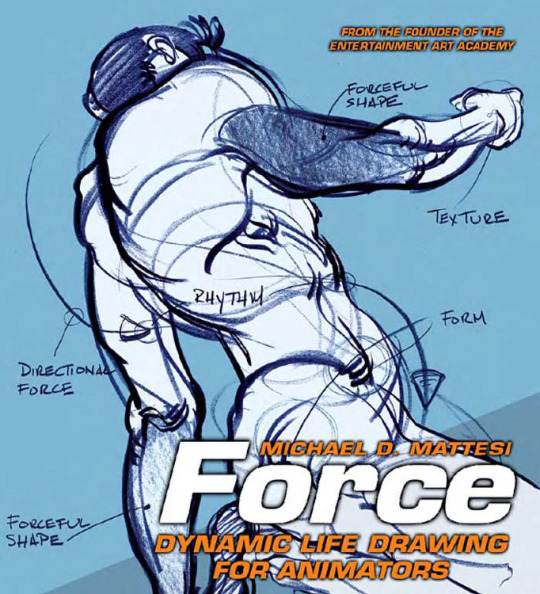
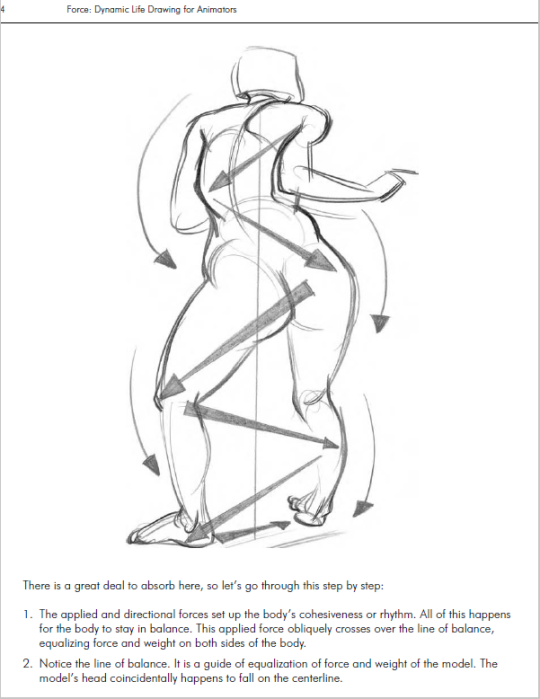
2) Focus on the overall gesture of the pose instead of being anatomically correct. I recommend picking up this book by Michael D. Mattesi. “Force: Dynamic Life Drawing For Animators”. Wonderful, wonderful gestures and consideration for flow of the entire figure.
3) AT THE SAME TIME, you want to keep in mind proportional anatomy. For that, there are a number of tutorials and books. One I’ve found useful is Michael Hampton’s “Figure Drawing: Design and Invention” (Are all these dudes named Michael? lol)
Personally, I switch back and forth between studying gesture and studying anatomy. It is a constant game of catch up and playing with the two styles, which is what makes it so fun! There’s always room to learn and relearn.
And here is a very nice example of what color studies achieve! Color really affects the mood of the piece. It is crucial to study what different colors will try to evoke, and what colors look good together!
For this I also highly, HIGHLY recommend doing color studies using traditional/analog methods (i.e. not digital). My reasoning for this is that you really get a feel of mixing colors together with a limited palette that you normally wouldn’t get with an infinite digital color wheel. (Also it’s just nice to have physical pieces to hold and admire).
(Marla Baggetta, Going for 100, 2009, pastel and mixed media on paper. Seventy-two of 103 studies, 10 x 10 inches each.)
Observational Studies
These are pretty self-explanatory! You draw from observation. You’ve probably encountered the standard drawing of an assortment of fruit. Usually done in black-and-white mediums, observational studies are useful for honing your skills of direct translation from what your eyes see onto the paper! This is where your realism skills will truly develop and shine.~
(This is actually a piece by yours truly, Mod Future. 18×24″ in Charcoal.)
Hope this was helpful! I tried to fit as much info as I could think of!
You know that scene where Tripitaka finds water (gross, but drinkable water) in a cactus? And the gods just follow her lead?
Totally head-canoning that this sort of thing happens all the time. As in, Tripitaka is the only one of the group with any kind of wilderness survival skills. Pigsy hates leaving civilization while Sandy has always stuck to cities because they’re easier to hide in. Monkey knows a bit more because he spent a few years in the wilderness before the Master found him, but it was in a completely different area/environment so he’s not good at identifying edible plants/food.
Tripitaka, meanwhile, grew up in an isolated house in the middle of a forest, and you know what three year olds are like – if it looks pretty they’ll stick it in their mouths. So the Scholar was always chasing after her going “not those berries, NOT THOSE BERRIES!” And as she got older he started pointing out the edible stuff as well because he didn’t have enough money that they could turn their noses down at free food, so as a result you have a grown-up Tripitaka who’s pretty darn good at woodscraft.
I’m just picturing Tripitaka always being the one to veer off the road and coming back with a handful of leaves or grubs, and being all “you’ll love it, trust me, no? okay, more for me then”, and then calmly eating a panful of fried crickets or something while the others look on in horrified fascination. Pigsy and Sandy are just glad she doesn’t poison herself while it’s developed into this game of chicken between her and Monkey, who will eat whatever she offers no matter how gross it looks rather than admit he can’t do it. (Though the grubs were actually quite tasty).