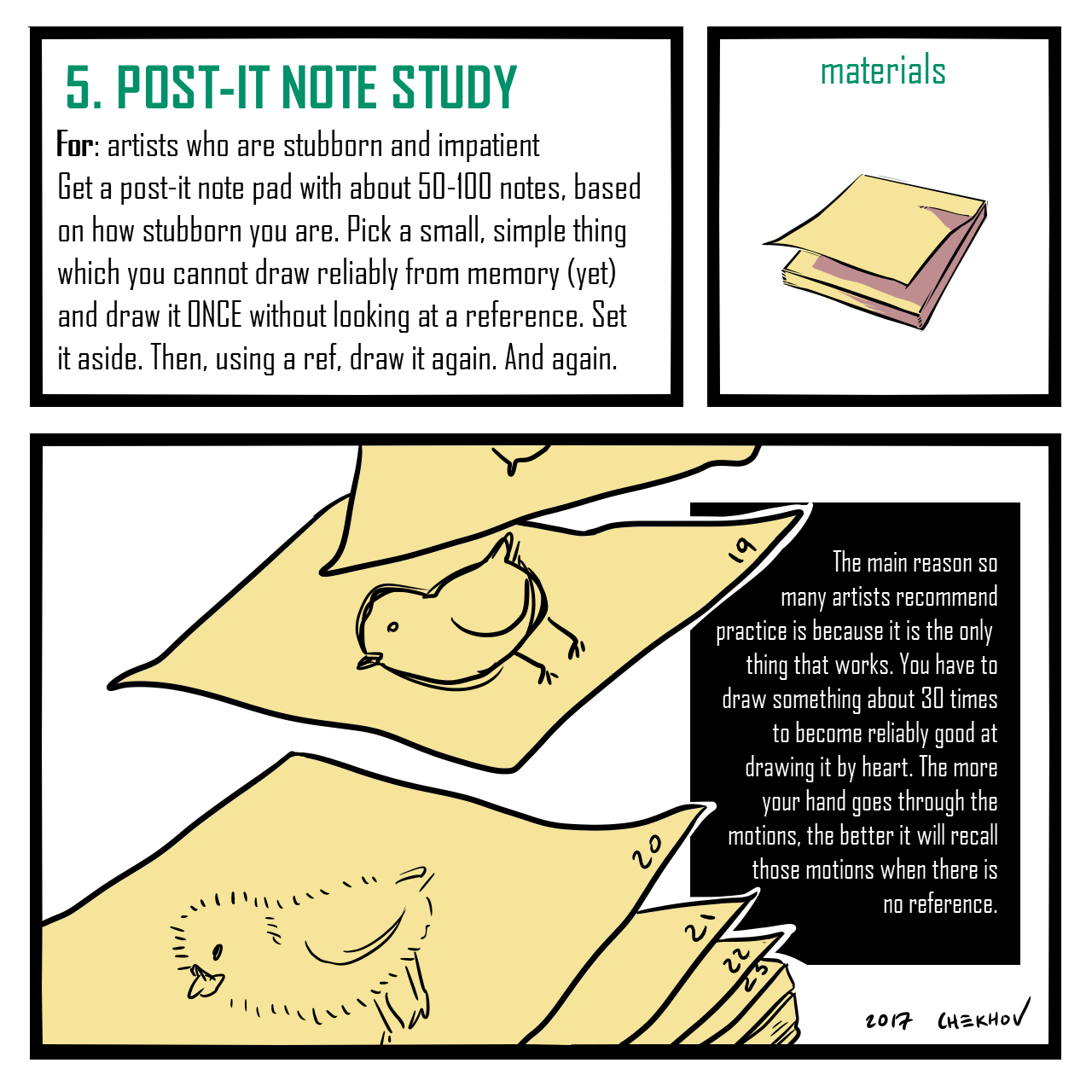
Post it notes are usually found around the office, so this is a great way to use company money to further yourself. I recommend trying to do this quickly, as well. The idea is to un-train your brain from throwing down incorrect details.
The steps are:
Think of one (1) thing you wanna learn to draw.
Draw that thing from memory on a post it.
Look for a picture of that thing on Google, or in a book. Think about what you got wrong in your first drawing.
Take another post-it and draw that thing again. (Without reference.)
Look at a reference again. Check for mistakes again.
Rinse and repeat.
This exercise was inspired by the How to Draw Anything tutorial by Xuu on DeviantArt. I recommend everyone give this a read. It’s an excellent approach to drawing as muscle memory instead of some unobtainable ‘talent’ that you have to magically happen upon.
Studies are basically just practice! Whatever you need practice for, you study! Just like any subject (math, science, language, etc.), you need to study in art to get better at it too!
There are so many different kinds of studies you can do, not limited to figure studies! You can study from master works, from observation, and/or from photos. You can also study for a variety of reasons: you can study form, value, color, anatomy, and/or gesture.
Figure Studies
This is what people refer to the most, because of course the (human) figure is very complicated and usually the centerpiece!
-Here is a link to a masterpost of websites used for figure posing, from video models to databases of photographs. MANY of these models are NUDE, so be aware and open-minded: https://www.artmodeltips.com/poses/poses/
1) Try to find a LIVE life drawing session near you. If you can’t, I highly recommend Croquis Cafe on youtube for video sessions. It’s as close as you can get to live. The reason why I love live sessions is because you get to see where the model is straining their muscles, the way their ribs might poke out when they breathe, and most importantly, where their weight is pressed down on.
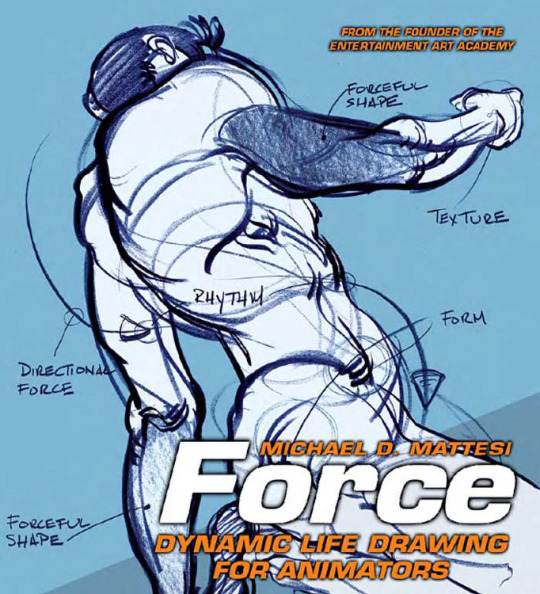
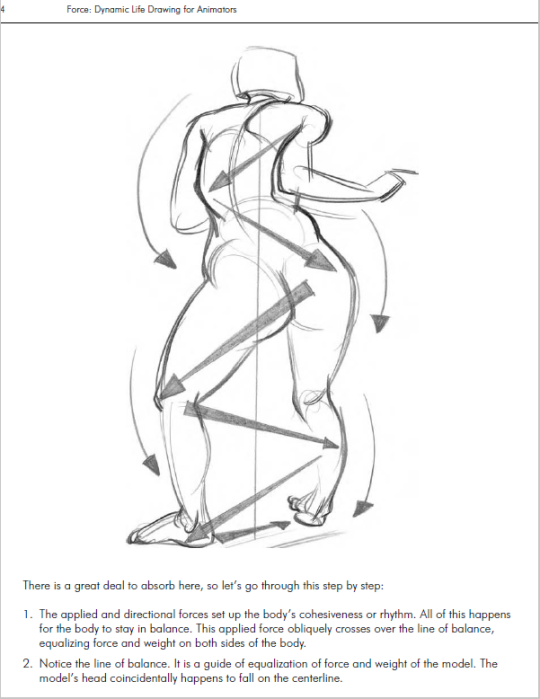
2) Focus on the overall gesture of the pose instead of being anatomically correct. I recommend picking up this book by Michael D. Mattesi. “Force: Dynamic Life Drawing For Animators”. Wonderful, wonderful gestures and consideration for flow of the entire figure.
3) AT THE SAME TIME, you want to keep in mind proportional anatomy. For that, there are a number of tutorials and books. One I’ve found useful is Michael Hampton’s “Figure Drawing: Design and Invention” (Are all these dudes named Michael? lol)
Personally, I switch back and forth between studying gesture and studying anatomy. It is a constant game of catch up and playing with the two styles, which is what makes it so fun! There’s always room to learn and relearn.
And here is a very nice example of what color studies achieve! Color really affects the mood of the piece. It is crucial to study what different colors will try to evoke, and what colors look good together!
For this I also highly, HIGHLY recommend doing color studies using traditional/analog methods (i.e. not digital). My reasoning for this is that you really get a feel of mixing colors together with a limited palette that you normally wouldn’t get with an infinite digital color wheel. (Also it’s just nice to have physical pieces to hold and admire).
(Marla Baggetta, Going for 100, 2009, pastel and mixed media on paper. Seventy-two of 103 studies, 10 x 10 inches each.)
Observational Studies
These are pretty self-explanatory! You draw from observation. You’ve probably encountered the standard drawing of an assortment of fruit. Usually done in black-and-white mediums, observational studies are useful for honing your skills of direct translation from what your eyes see onto the paper! This is where your realism skills will truly develop and shine.~
(This is actually a piece by yours truly, Mod Future. 18×24″ in Charcoal.)
Hope this was helpful! I tried to fit as much info as I could think of!
Sycra Yasin is a literal godsend to this earth and I love him to death. If you want comprehensive muscle tutorials, THIS GUY is YOUR GUY.
Second, let me introduce you to George Bridgman:
Studying this kind of structural anatomy is super helpful for learning and simplifying any kind of figure.
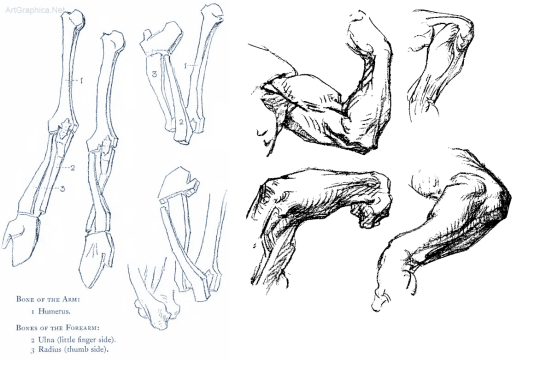
I’ve compiled some hand/arm tutorials from both myself and mod goji for some further study:
As for posing the arm with the body, I like to use this simplified form of the arm to create my sketch poses so I know what the overall will look like.
It’s not a direct science, and it is a lot of muscle memory. Knowing how long the arms should be in conjunction with the torso is still a struggle for me. When in doubt, do the pose yourself! See how you look in a mirror 🙂
i didn’t mean to make this so long but i wanted to both analyze my own style and give other people a look into it! I hope someone can find some use for it!
A long time ago an anon asked my thoughts about drawing backgrounds, so I finally got around to putting this together. It’s more prop-centric, but it still represents my philosophy to backgrounds.
I’ll try to do something more about drawing actual background spaces in the future! Please let me know what you think, if anything is unclear, or if you have suggestions for other tutorials you might find helpful!
the first version is the easier but also boring for the eye, the sequence rectangular-square-square and repetitive, try to use diagonal cut, open space and vertical cut to help the movement of the story and action.







 Sincorazon15